
 21 December 2019
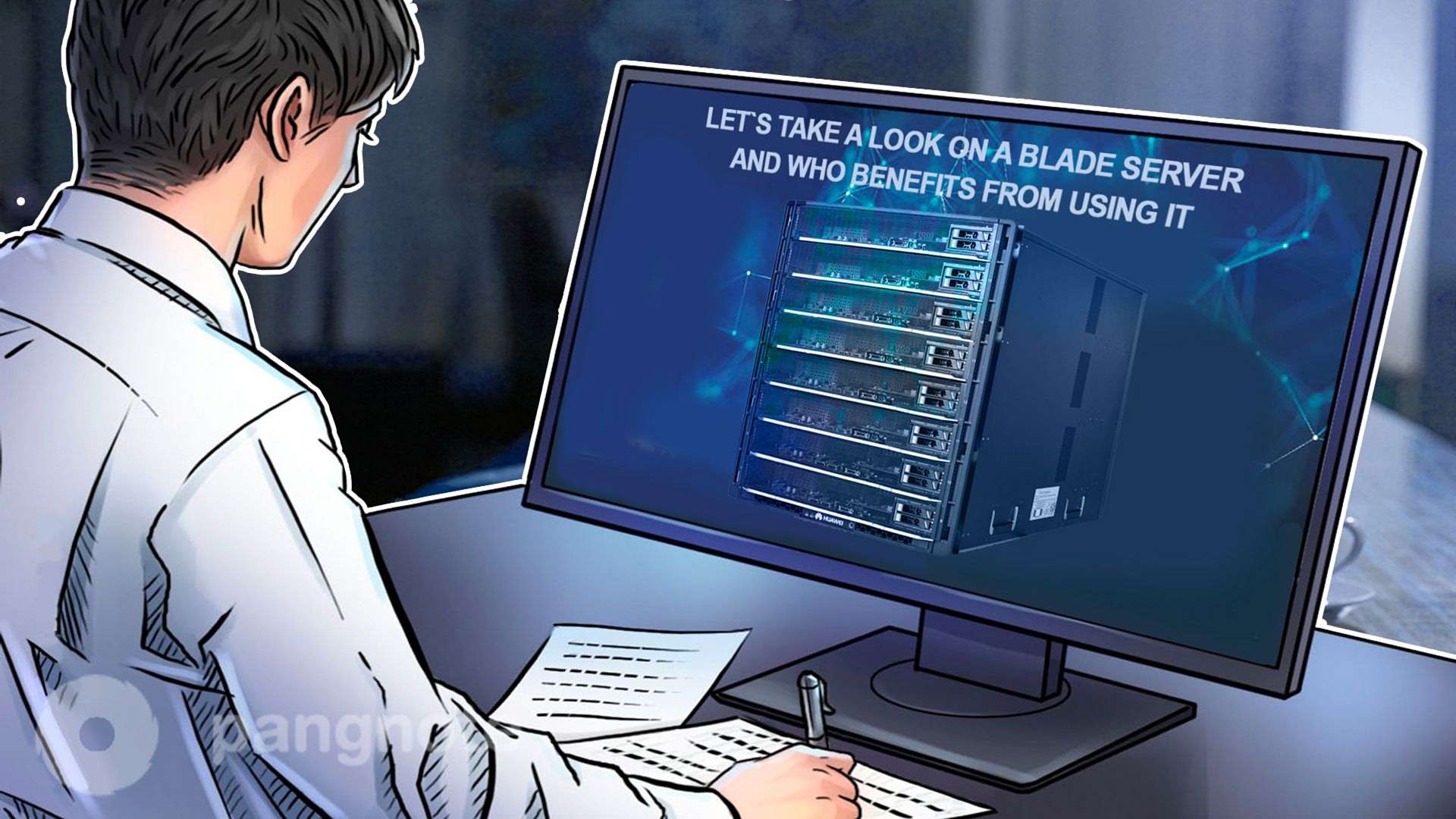
Let`s take a look on a blade server and who benefits from using it?
A blade server or blade server (from the English blade - “blade”) is a modern solution in server architecture, the ability to significantly reduce the amount of equipment without sacrificing performance. This approach has a number of advantages and disadvantages, which we will discuss below. But to begin with, what is the essence of the problem, which made developers switch to a "blade" architecture.
A logical trend in the development of server systems is a constant increase in equipment capacity. These are new processors, memory, storage systems, communication buses. At the same time, a constant increase in requirements leads to the need to expand equipment and use more and more space. However, most servers are not loaded and are 50% and three quarters of administrators are exclusively engaged in supporting the work of installed equipment. Therefore, modern systems need to increase work efficiency.
You can simply increase the number of servers in the racks. But the heat output, the number of communication cables, the energy consumed and, which is especially important, require more space proportionally increases.
Design features
If we consider it purely in terms of the components used, the blade server does not demonstrate any breakthrough technologies. Its advantages in another are compactness of their placement, high concentration of components per unit area. This required lengthy development and optimization of solutions, and the result was a relatively simple but interesting blade server design.
The main components:
- The case in which the blade server blade is located. In fact, it is a chassis for unified modules, which can be quickly replaced, including the "hot" way.
- Blade Modules. In fact, these are ordinary servers located in special cases, which significantly reduced their size.
- Power supplies, connections and other optional modules.
A design feature is the placement of all additional systems outside the box. This cooling, power, hard drive, etc. In the case of the blade server itself must be only a processor and RAM, everything else can be taken out of it. Such an architecture provides efficient operation in an array, but is unacceptable as a single system. As a result, all volumetric, space-consuming elements with excessive heat generation are located outside of the blade modules.
0
0
Comments
Facebook improves connectivity in the African region with an undersea internet cable
7 November 2021Can blind spots be avoided when monitoring DCs?
3 November 2021Influence of automation in DC on engineering personnel
30 October 2021The frequency of accidents in DC has decreased and the sum of damage has increased significantly
26 October 2021


How to avoid mistakes when choosing a hosting
How to avoid mistakes when choosing a hosting

Chinese manufacturer Loongson will enter the market ..
Chinese manufacturer Loongson will enter the market with 16-core processor in 2020

Please sign-in to comment here